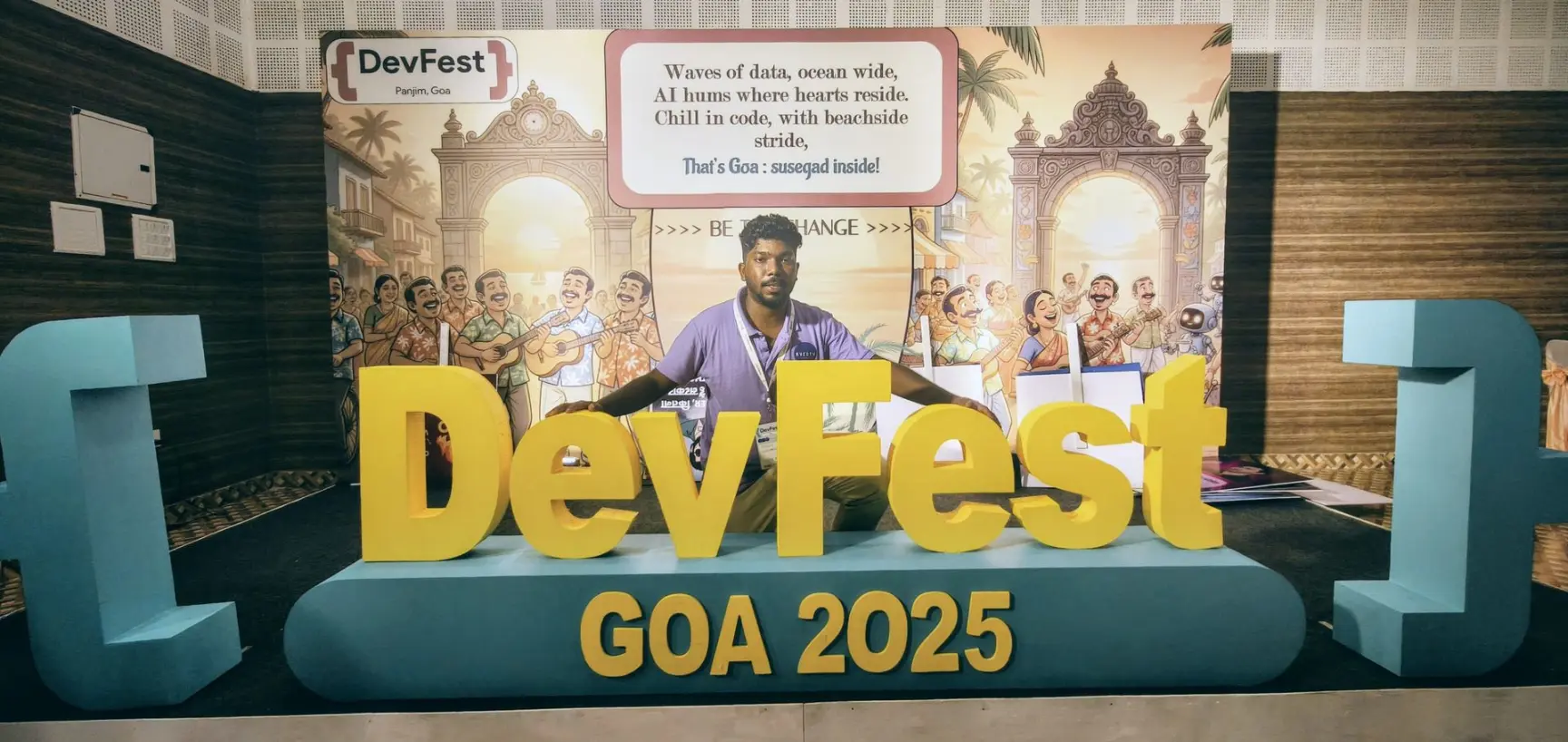
The air in Panjim, Goa, buzzed with innovation and excitement as developers, tech enthusiasts, and industry leaders converged at the Convention Center for Google DevFest 2025. This year's event was a melting pot of cutting-edge ideas, practical insights, and groundbreaking discussions, particularly focusing on the ever-evolving landscape of Artificial Intelligence and its integration into various development spheres.
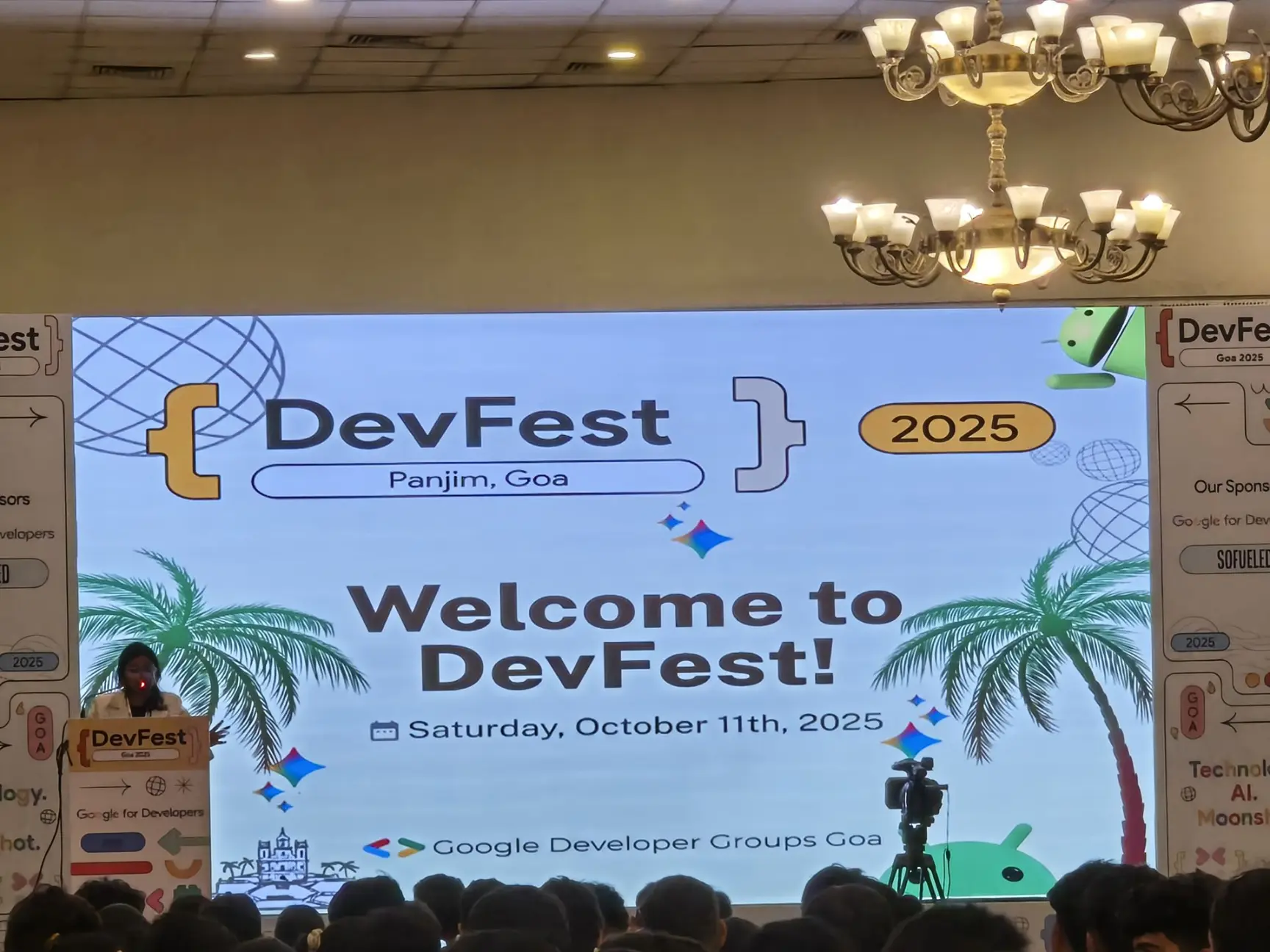
Here's a recap of some of the most compelling talks and key takeaways from DevFest Goa 2025:
See Ya SEO, Hello AEO + GEO: The Future of Discoverability
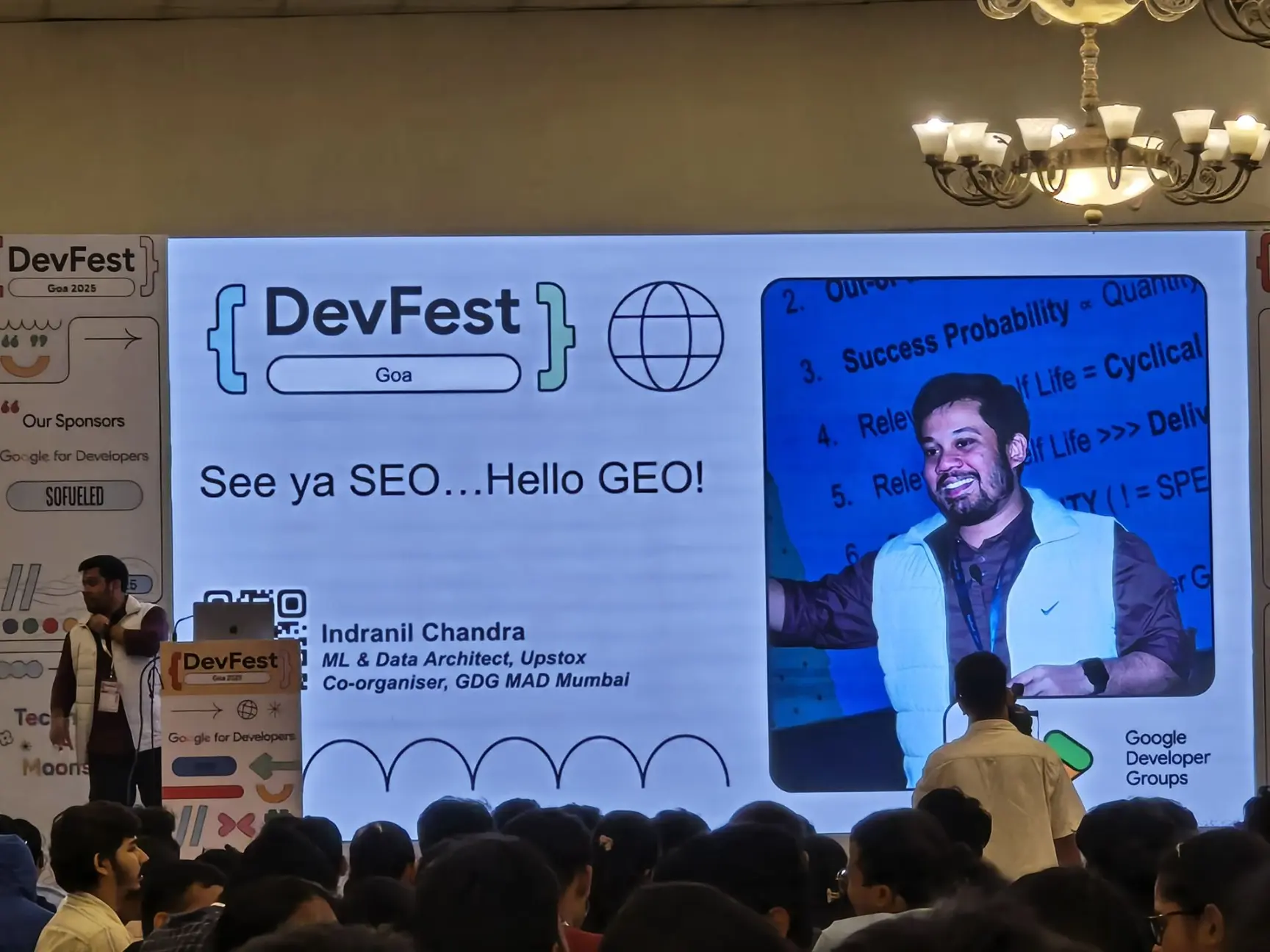
Indranil from Upstox captivated the audience with his talk, "See Ya SEO....Start with GEO," shedding light on the paradigm shift from traditional Search Engine Optimization (SEO) to a more sophisticated blend of AI Engine Optimization (AEO) and Geographic Engine Optimization (GEO).
Indranil emphasized that in a world increasingly dominated by Large Language Models (LLMs) and AI Overviews, the goal has transitioned from mere "search" to "recall." The essence of AEO lies in crafting high-quality, AI-readable content that LLMs can easily ingest and utilize, while GEO ensures that this content is recalled in relevant geographical contexts.
He outlined five crucial strategies for this new era of discoverability:
Multilingual by Default: Preparing content for a global, diverse audience from the outset.
Canonical Answers at Scale (CAS): Providing definitive, well-structured answers to common queries that LLMs can readily source.
Make Your Content AI-Readable: Optimizing content structure, clarity, and conciseness for efficient AI processing.
Model Specific Playbook: Tailoring content strategies to the unique characteristics and requirements of different AI models.
Seed Authority in Overweight Sources: Building credibility and presence in platforms and sources that LLMs frequently reference.
Key Performance Indicators (KPIs) for this new approach include AI Overview (AO) inclusion rate, AI citation share, and AI referral clicks, highlighting a fundamental shift in how we measure content success. Indranil also proposed a practical solution: converting website content into various markdown versions (llms.txt for summaries, llms.ctx.txt for drilled-down versions, and llms.ctx.full.txt for comprehensive essays) to cater to different LLM needs.
Making AI Think: The Power of Graph Databases with Neo4j
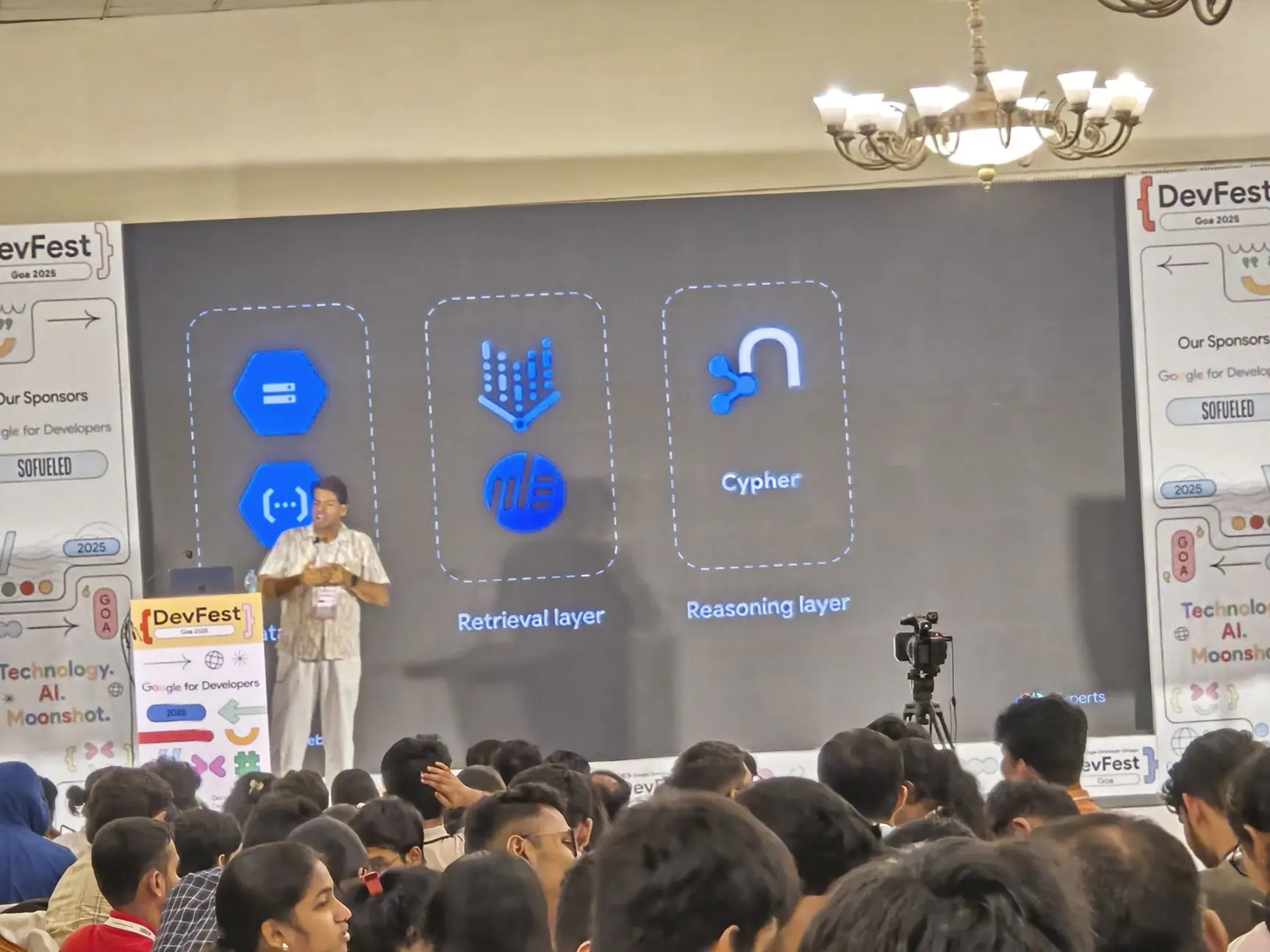
A fascinating session delved into empowering AI with deeper reasoning capabilities using Neo4j, a leading graph database. The speaker showcased how the synergy between Natural Language Processing (NLP) and graph structures can unlock more intelligent AI interactions.
The process involves:
Extracting Entities with SpaCy: Leveraging NLP tools like SpaCy to identify and extract key entities from unstructured text.
Creating Graph Relationships: Modeling these entities and their connections as a knowledge graph within Neo4j.
Clustering and Pattern Discovery: Utilizing graph algorithms to uncover hidden patterns and relationships within the data.
Multi-Hop Reasoning with Cypher: Employing Neo4j's query language, Cypher, to perform complex, multi-hop reasoning across the graph, enabling AI to "think" in a more connected way.
Hybrid Retrieval with Graph + Vectors: Combining the strengths of knowledge graphs with vector embeddings for more nuanced and context-aware information retrieval.
This approach demonstrated how AI can move beyond simple pattern matching to truly understand and reason about complex information.
Beyond One Model: The Rise of Multi-Agent Systems
The concept of "Beyond One Model" explored the exciting domain of multi-agent AI systems, where different AI agents collaborate to achieve more complex goals. The talk elaborated on various agent architectures:
Reactive Agents: Simple agents that respond directly to their current environment.
Deliberative Agents: Agents that plan and reason about their actions before executing them.
Hybrid Agents: Combining reactive and deliberative approaches for a balance of responsiveness and planning.
Learning Agents: Agents that improve their performance over time through experience.
This session highlighted the potential for building more robust, adaptive, and intelligent AI systems by distributing tasks and fostering collaboration among specialized agents.
Kubernetes Meets AI: Intelligent Orchestration
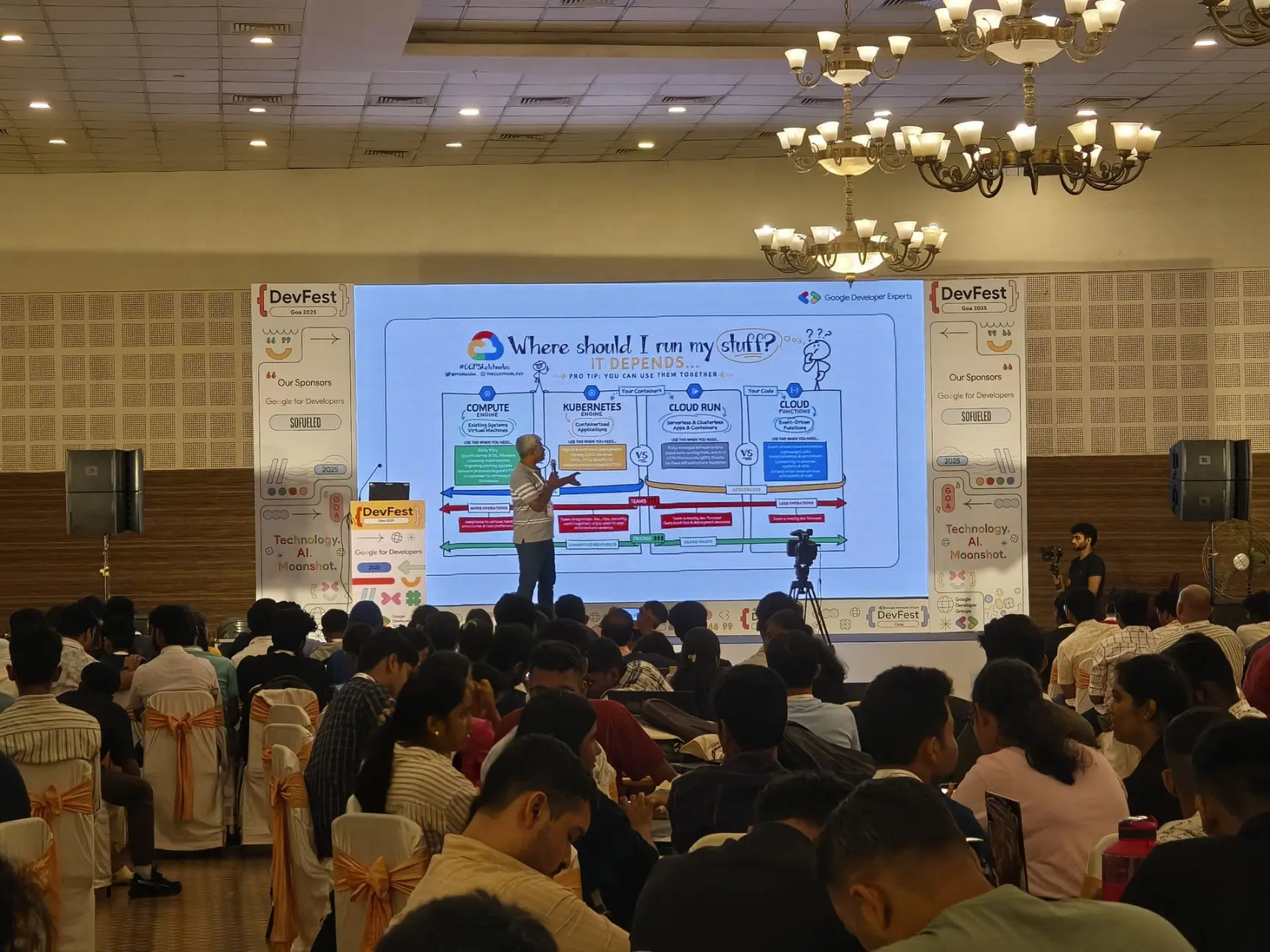
The intersection of Kubernetes, the leading container orchestration platform, and Artificial Intelligence was another hot topic. The speaker introduced two innovative tools that are set to revolutionize how developers manage and optimize their Kubernetes deployments:
K8sGPT: This tool leverages AI to provide intelligent insights and suggestions for Kubernetes cluster management, troubleshooting, and optimization. Imagine an AI assistant that understands your cluster's health and can proactively suggest solutions.
kubectl-ai: A new tool aligned with Gemini and compatible with Ollama, kubectl-ai integrates AI directly into the kubectl command-line interface. This allows developers to interact with their Kubernetes clusters using natural language, making operations more intuitive and efficient.
These advancements promise to simplify the complexities of Kubernetes, making it more accessible and powerful for developers.
DevFest Goa 2025 was a powerful reminder of the rapid advancements in AI and its transformative impact across the tech landscape. From redefining how we think about content discoverability to empowering AI with deeper reasoning and making complex systems like Kubernetes more intelligent, the future of development is undeniably intertwined with AI. Attendees left inspired, equipped with new knowledge, and ready to contribute to this exciting new era.